How to use this checklist
This checklist is written for an independent hotel or resort of roughly 20 to 150 rooms with a small engineering team. It is organized by area, so each person knows what they own, and by frequency, so nothing waits for the yearly service. Copy it, delete what you don't have, and add the equipment it doesn't cover.
- Your manuals and your code beat this list.The intervals here are typical starting points. The manufacturer's manual, your insurer and your local code set the real interval. Where they disagree with this page, they win.
- Safety systems belong to licensed people.Fire alarms, sprinklers, extinguishers, emergency lighting, gas, pool chemistry and water safety are regulated. Your team does the visual checks and keeps the records. Licensed contractors do the testing and certification your authority requires.
- A check that finds a fault becomes a job."Checked" is not "fixed". If a line fails, open a separate repair with an owner and a date, so the fault can't be forgotten inside a closed checklist.
The year at a glance
Most daily and weekly lines take minutes. The weight is in the room rotation and the contractor visits, so put those in the calendar first.
| Frequency | What happens | Usual owner |
|---|---|---|
| Daily | Public areas and exterior walk, plant room readings, fire panel check, pool chemistry before opening, cold room temperatures. | Duty engineer, pool operator, kitchen |
| Weekly | This week's rotation rooms, fire door and exit route walk, generator visual, flushing outlets in empty rooms. | Engineering |
| Monthly | Guest-room AC filters, GFCI tests, emergency light test, extinguisher inspection, generator run, roof walk. | Engineering |
| Quarterly | Every room has had its full visit, condensate drains flushed, shower heads descaled, mattresses rotated. | Engineering, housekeeping |
| Yearly | Contractor services for fire alarm, sprinklers, extinguishers, kitchen suppression, backflow, HVAC, generator, elevators and boilers. Roof and facade survey. | Licensed contractors |
A quarterly room cycle is simple arithmetic: divide your rooms by 13 weeks. A 100-room hotel needs about eight rooms a week, which most teams can absorb if the rooms are agreed with the front desk in advance.
Guest rooms: the room-by-room check
Do the full visit when the room is empty, ideally on a departure day with no same-day arrival. Time your first ten rooms so you know what to plan for. If the visit finds something that needs parts or a contractor, the room goes out of order with a reason and a return date.
Entry and door
- Door closes and latches on its own from fully open. The closer does not slam or leak oil.
- Lock reads a keycard first time. Deadbolt and security latch work. Lock battery replaced if reported low.
- Peephole clear, number plate tight, connecting door locks from both sides.
- Evacuation plan on the back of the door present and current.
Bedroom and living area
- Every light works, and lamps in the same room give the same color of light.
- Switches and sockets tight to the wall with no scorch marks. USB ports charge a phone.
- TV, remote and inputs work. Remote batteries fresh.
- Phone has a dial tone and correct speed-dial labels.
- Safe opens with the master code; battery good.
- Fridge or minibar cold and quiet, door gasket sealing.
- Kettle or coffee machine works and has been descaled.
- Curtains and blackout linings run freely and close fully.
- Bed frame and headboard tight and silent when you sit down.
- Mattress rotated or flipped on the manufacturer's schedule, with the date recorded.
- Drawers run, handles tight, no sharp edges or splinters.
- Walls and ceiling checked for dents and paint touch-ups. A ceiling water stain is a leak to find, not a patch to paint.
- Carpet and flooring: no lifting edges, loose tiles or permanent stains.
- Smoke detector present, uncovered and undamaged. Testing follows your fire alarm contractor's schedule.
AC, windows and balcony
- AC filter clean, unit quiet, cold air at the outlet within a few minutes.
- No water marks or drips under the indoor unit. Drain pan clean and draining.
- Thermostat or remote responds and reads a sensible temperature.
- Windows and balcony doors open, close and lock. Seals intact, tracks and track drain holes clear.
- Balcony railing solid, with no loose fixings, rust or widened gaps.
- Window restrictors, where fitted, stop at the set opening.
Bathrooms
Bathrooms produce most small guest complaints, and most of them can be found before the guest finds them.
- Toilet flushes fully and stops filling. For a silent leak, put a few drops of food coloring in the tank and wait without flushing; color in the bowl means the flapper leaks. The EPA's WaterSense leak guidance uses the same test.
- Seat and lid tight, toilet firm on the floor, silicone at the base sound.
- Taps don't drip and handles are tight.
- Aerators and shower head free of scale, with an even spray. Hard water may need monthly descaling.
- Shower reaches temperature and holds it. A thermostatic or pressure-balancing valve holds temperature when another tap runs.
- Basin, bath and shower drain quickly. Hair traps cleared.
- Grout and silicone without gaps or black mold. Replace moldy silicone rather than cleaning over it.
- Extractor fan pulls air: a sheet of toilet paper should hold against the grille.
- Grab bars, towel rails, robe hooks and paper holders tight. Pull on them the way a guest would.
- GFCI or RCD outlets trip and reset with the test button.
- Hair dryer and its cord undamaged. Mirror lights work.
- Under the basin: no drips at the trap or supply hoses, and the shut-off valves turn.
- Shower screen seals and hinges intact, glass free of chips. Floor drain trap holds water so it doesn't smell.
HVAC and AC units
In most hotels AC is the biggest single source of guest-room calls. In hot, humid or coastal climates, also read our AC guide for humid climates, because drains and coils need far more attention there.
| Frequency | Check | Who |
|---|---|---|
| Daily | Log central plant temperatures and pressures. Walk past condensers and rooftop units for noise, leaks or trips. | Engineering |
| Weekly | Review AC complaints by room. A room with a second complaint gets a proper inspection, not just a reset. | Engineering |
| Monthly | Clean or replace filters in guest-room units and fan coils, more often in dusty or busy periods. | Engineering |
| Quarterly | Flush condensate drains and clean drain pans as the manufacturer describes. Inspect coils. Check outdoor units for corrosion, bent fins and debris. | Engineering |
| Yearly | Contractor service of each system: refrigerant circuit, electrical connections, motors, coils and controls. Cooling towers follow your water management program. | Licensed HVAC contractor |
Hot water and plumbing
| Frequency | Check | Who |
|---|---|---|
| Daily | Log water heater flow and return temperatures against your water program's limits. Look for leaks and alarms in the plant room. | Engineering |
| Weekly | Run water at outlets in rooms that have stood empty, as your water program sets out. Check sump pumps and float switches. | Engineering, housekeeping |
| Monthly | Inspect pumps, valves and visible pipework. Check softener or treatment equipment and mixed water temperature at sample outlets. | Engineering |
| Quarterly | Descale shower heads and aerators. Turn main isolation valves so they move when you need them. | Engineering |
| Yearly | Water heater service to the manufacturer's manual, including the relief valve. Backflow test by a certified tester where your water utility requires it. Tank cleaning as your water program sets. | Licensed plumber |
Hot water kept hot enough to control Legionella can scald at the tap, which is why mixing valves matter. Both sides of that balance belong in your water program. If you close floors or the property for a season, follow the CDC's guidance on reopening buildings before guests return.
Electrical and lighting
| Frequency | Check | Who |
|---|---|---|
| Daily | Exterior and public lighting on, timers set right for the season. Failed public-area lamps replaced the same day. | Duty engineer |
| Weekly | Back-of-house walk for daisy-chained power strips and anything stored in front of panels. | Engineering |
| Monthly | Test GFCI or RCD outlets in wet areas with the test button, as the device maker instructs. | Engineering |
| Quarterly | Outdoor fixtures and pool light housings checked for water entry and corrosion. | Engineering |
| Yearly | Licensed electrician inspects panels and switchgear. Many hotels add a thermal camera scan to find hot connections early. | Licensed electrician |
Work inside panels or on equipment that can be energized is for qualified people, with the power isolated and locked off first.
Pool and spa
| Frequency | Check | Who |
|---|---|---|
| Before opening | Test and log disinfectant and pH. Main drain visible. Gates self-close and latch. Rescue equipment and signs in place. | Pool operator |
| Daily | Retest as your code requires. Skim and empty baskets. Note filter pressure. Check the deck for broken tiles and glass. | Pool operator |
| Weekly | Backwash or clean filters when pressure and the manufacturer say so. Brush walls and steps. Scrub spa surfaces, which the CDC's hot tub guidance ties to Legionella control. | Pool operator |
| Monthly | Drain covers intact and firmly fixed. Pump seals, feeder tubing and plant room ventilation checked. | Engineering |
| Yearly | Replace drain covers before the expiration date marked on them, as the CPSC's reminder to public pools sets out for the US. Service pumps, heaters and controllers. Renew operator training and permits. | Pool contractor |
Kitchen and laundry
| Frequency | Check | Who |
|---|---|---|
| Daily | Log fridge, freezer and cold room temperatures. Burners light with a steady flame. Dryer lint screens cleaned every shift or as the manufacturer says. | Kitchen, laundry |
| Weekly | Hood filters cleaned as your cooking needs. Cold room gaskets and closers checked. Dishwasher temperatures logged. Washer seals and dosing lines checked. | Kitchen, laundry |
| Monthly | Clean refrigeration condenser coils. Gas hoses, restraint cables and shut-off valves checked and accessible. Dryer exhaust flaps open freely outside. | Engineering |
| Twice a year | Kitchen fire suppression inspected by a licensed contractor, typically every six months, or as your code requires. Hood and duct cleaning at the interval your contractor sets. | Licensed contractors |
| Yearly | Gas appliances and lines checked by a licensed gas contractor. Dryer ducts cleaned to the outside wall; the US Fire Administration warns that uncleaned lint filters and vents raise the risk of dryer fires. Grease trap pumped as your local rules require. | Licensed contractors |
Fire and life safety
| Frequency | Check | Who |
|---|---|---|
| Daily | Fire alarm panel normal, with no trouble signals. Exit routes and stairwells clear. Exit doors open from inside. No fire doors wedged open. | Duty engineer, night auditor |
| Weekly | Corridor walk: fire doors close and latch, extinguishers in place, exit signs lit, sprinkler heads not painted, covered or used as hangers. NFPA's note on visual inspection of sprinklers shows what to look for. | Engineering |
| Monthly | Extinguishers: in place, pin and seal intact, gauge in range, tag current. In US workplaces, OSHA's extinguisher rule calls for monthly visual checks and annual maintenance. Emergency lights and exit signs: functional test, commonly 30 seconds, as NFPA describes for the Life Safety Code. | Engineering |
| Quarterly | Contractor visits for the quarterly and semiannual sprinkler and alarm items your code sets. | Licensed fire contractor |
| Yearly | Fire alarm inspection and test to NFPA 72 or your local code. Annual sprinkler inspection. Extinguisher maintenance. Full-duration emergency lighting test, commonly 90 minutes. Fire door inspection (see NFPA's fire door FAQs). Drills and staff training. | Licensed contractors, management |
Guest-room smoke alarms and carbon monoxide alarms follow the same pattern: your team checks they are present and uncovered, and testing happens on the schedule your code and contractor set.
Exterior and grounds
| Frequency | Check | Who |
|---|---|---|
| Daily | Entrance, paths, steps and parking walked for trip hazards, broken lights and glass. Irrigation not spraying walkways. | Grounds |
| Weekly | Gutters, roof drains and surface drains cleared, especially before forecast rain. Handrails and steps checked. | Grounds, engineering |
| Monthly | Roof walk, and again after every storm. Balconies and walkways checked for loose tiles and rusting fixings, monthly at the very least on the coast. Pest stations with your contractor. | Engineering |
| Quarterly | Trees trimmed away from roofs, lines and lights. Facade paint and sealant touched up. Gates and external locks checked. | Grounds, engineering |
| Yearly | Roof and facade survey. Before storm season: shutters, tie-downs, drainage and generator fuel ready. | Engineering, contractors |
Generator and back-of-house
| Frequency | Check | Who |
|---|---|---|
| Daily | Plant rooms locked, dry and clean, with nothing stored in front of panels, valves or exits. | Duty engineer |
| Weekly | Generator visual: fuel, oil and coolant levels, no leaks, battery charger normal, panel in automatic. | Engineering |
| Monthly | Run the generator under load for the time and load the manufacturer and your code set. Where adopted, NFPA 110 covers emergency and standby power. Log run hours and alarms. | Engineering |
| Quarterly | Generator batteries and terminals checked. Standby water pumps exercised. Elevator machine rooms clean, dry and locked. | Engineering |
| Yearly | Generator service, with a load bank test if the manufacturer or code calls for it. Stored diesel tested. Elevator, boiler and pressure vessel inspections where required. | Licensed contractors |
How to run this checklist without it becoming paperwork
Most hotels have a checklist. Far fewer have one that is still being done in month six. The difference is never the list. It is how the list is run.
- One owner per areaNot "engineering", but a named person for guest rooms, one for plant, one for the pool, one for contractor visits. The owner doesn't do every line. They make sure it gets done, and they speak up early when it won't.
- A recurring schedule, not a binderEvery line becomes recurring work with a due date: "rooms 301 to 308 this week", "generator run first Tuesday". Work with a date gets done. Work in a binder gets done when someone remembers.
- Photos for the lines that matterThe generator panel after the run, the extinguisher tag, the pool reading, the clean filter. Five seconds now settles every later question.
- Rooms agreed with the front deskAgree the week's rotation rooms on Monday, so the desk keeps them empty for an hour and housekeeping knows when to go in after.
- A short weekly review of what slippedFifteen minutes a week: which checks are overdue, why, and who will do them by when. Read the faults the checks found, too. Three blocked condensate drains on the same riser is a pattern, not three jobs. Our guide to the weekly backlog review shows how to run it.
- Contractor reports kept with the equipmentWhen the fire inspector asks for last year's sprinkler report, you want it in a minute, not somewhere in an old email.
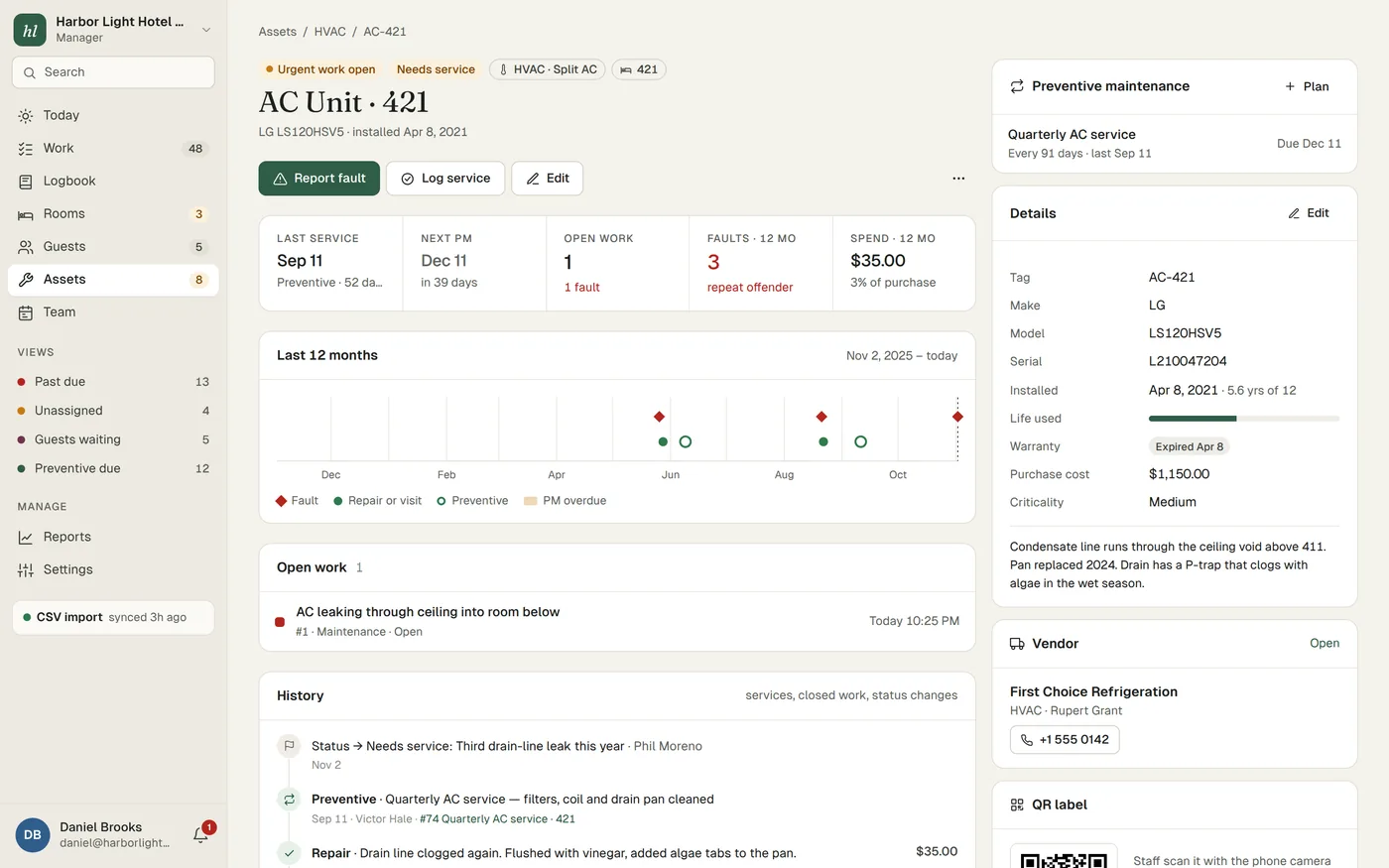
If you use Turndown, each line here can live as a preventive maintenance plan on the room or asset. The work appears in the team's queue on schedule, with a checklist whose required steps must be ticked before the job closes, photos, and the history kept on the unit's page. See how preventive maintenance works in Turndown.
Then let your own fault history adjust the list. If the same units keep failing, shorten their interval or plan their replacement.